Brooklyn's Grand Army Plaza Set for Major Redesign Under New City Initiative
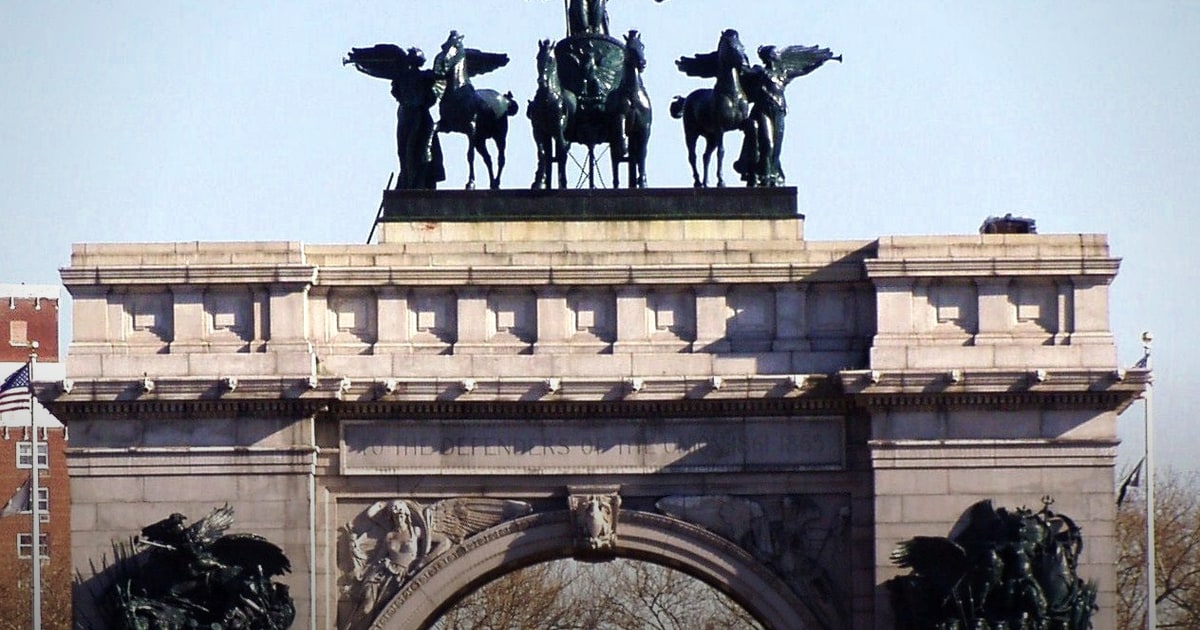
Richard Kessler / Copyrighted free use
Brooklyn's Grand Army Plaza, the sweeping traffic circle anchored by the Soldiers' and Sailors' Arch and long considered the formal entrance to Prospect Park, is headed for a long-awaited transformation.
Mayor Zohran Mamdani's office, in coordination with the New York City Department of Transportation, announced Monday the kickoff of a public review process to reimagine the plaza. The goal: turn a space that has prioritized vehicular traffic for decades into a more pedestrian-friendly connection between surrounding neighborhoods and Prospect Park.
According to Commercial Observer, the initiative will focus on the areas surrounding the plaza's Civil War monument, with an emphasis on improving accessibility and aesthetics. Full project cost estimates and construction timelines have not yet been disclosed, as the design phase will be shaped by community input.
Key Details
- Parties Involved: Mayor Zohran Mamdani's office, NYC Department of Transportation, with a public review process involving local community boards and stakeholders
- Location: Grand Army Plaza, bounded by Flatbush Avenue, Vanderbilt Avenue, Eastern Parkway, and Prospect Park West in Brooklyn
- Scope: Redesign of the public spaces around the Civil War memorial arch, improved pedestrian connections to Prospect Park
- Status: Public review process launching; no finalized design, budget, or construction timeline announced
- Context: The plaza currently functions as a major traffic rotary with 32,900 daily bus riders passing through the monument area, yet the space creates barriers for pedestrians and cyclists
Market Context
For commercial real estate professionals tracking Brooklyn's development trajectory, the Grand Army Plaza redesign carries implications beyond civic improvements. The plaza sits at the nexus of several high-value residential and commercial corridors, including Park Slope, Prospect Heights, and Downtown Brooklyn—an area that has seen billions in development over the past decade.
Better public space connectivity tends to increase foot traffic and enhance the attractiveness of nearby retail corridors. Properties along Flatbush Avenue and Vanderbilt Avenue, which have struggled with vacancy in certain pockets post-pandemic, could benefit from a more inviting pedestrian environment linking them directly to the park entrance.
The redesign also fits into a broader citywide trend of reclaiming auto-centric infrastructure for pedestrian and cycling use. Similar initiatives—such as the Times Square pedestrianization, the reconstruction of Union Square, and the ongoing work at Gowanus Plaza—have demonstrated that well-executed public space investments can enhance nearby retail corridors and attract greater foot traffic.
A revitalized Grand Army Plaza could further compress vacancy rates in an already tight market, particularly for restaurant and experiential retail tenants who benefit from park-adjacent foot traffic.
The public review process will be closely watched by developers with holdings in the surrounding area, including firms active along the Atlantic Yards corridor and the Vanderbilt Avenue commercial strip. Any reduction in through-traffic lanes may draw opposition from commuter advocates, but early signals from the administration suggest a strong commitment to prioritizing pedestrian safety and park access.
The scope review is expected to conclude by the end of 2026, with detailed plans to follow in 2027.
Stay Ahead of the Market
Get breaking CRE news, market reports, and analysis delivered to your inbox every morning.