Where the blue wave could create opportunities for commercial real estate

Analysis | Sam Losek
Housing developers, owners considering office conversions, construction firms and neighborhood retailers across the country could benefit if Democrats' midterm gains translate into policies that expand housing production and improve infrastructure. The opportunity for commercial real estate runs through the cost and feasibility of getting projects built, with different implications in New York, Chicago, Los Angeles and growing Sun Belt markets.
ABC News, using Associated Press election data, reported Democratic majorities in both chambers of Congress, setting up divided government with President Donald Trump. That national result changes the congressional agenda, but state laws, city approvals and local infrastructure still shape whether an individual development can proceed.
Housing production offers the clearest development opportunity
Senate Democrats' housing agenda announced in January called for incentives to reform local zoning, expanded down payment assistance, more modular and manufactured housing production, and additional rental relief. Those priorities give developers specific proposals to follow; the election itself does not fund them.
Policies that shorten an approval process or help finance a housing project could create work for builders, engineers, suppliers and brokers. If additional rental assistance is approved and funded, participating landlords could also benefit from more reliable rent collections while eligible residents gain housing stability.
The commercial benefit would depend on program design. Eligibility rules, affordability requirements, local approvals and the availability of construction financing determine which projects can participate. A housing initiative can expand the development pipeline without making every apartment acquisition a stronger investment.
Power investment could help industrial projects move forward
The party's March energy agenda proposed more transmission and storage, additional clean energy and measures to reduce project delays. If implemented effectively, those policies could improve the prospects of developments that need substantial, dependable electricity service.
That would matter for manufacturers, industrial landlords and data center developers evaluating whether a site can support their intended use. The relevant commercial milestones would be utility commitments, completed infrastructure and an achievable service date.
The same agenda also calls for data centers to bear their share of costs. An infrastructure package could expand access to power while placing additional obligations on large users. Developers would need to evaluate both sides of the eventual rules.
How the opportunity could differ across markets
Existing local programs show the kinds of barriers policy can address. These examples predate the election; they illustrate potential avenues for further support rather than benefits already delivered by the blue wave.
New York: making office conversions financeable
New York City's 467-m program provides property tax benefits for qualifying conversions of non-residential buildings into rental housing with affordable units. It shows how an affordability policy can also create a redevelopment opportunity for commercial owners.
Additional support could help eligible projects close financing gaps. Building layout, acquisition basis, construction costs and affordability obligations would still determine which conversions work. A tax benefit cannot make every office building suitable for apartments.
Chicago: connecting downtown housing with storefront demand
Chicago's LaSalle Street initiative combines support for office-to-residential conversions with efforts to activate storefronts and improve the public realm. The city's program page identifies six conversion proposals advancing with financial assistance and separately describes grants for eligible small-business build-outs.
The potential commercial benefit reaches beyond the converted buildings. More residents could support restaurants, shops and services outside office hours. Developers and retail landlords would still need completed apartments, occupied units and viable tenant businesses for that opportunity to become operating income.
Los Angeles: reducing the approval burden for reuse
Los Angeles' Citywide Adaptive Reuse Ordinance, effective February 1, 2026, streamlines procedures for eligible commercial buildings at least 15 years old to become housing. The city's implementation guidance explains the zoning conditions and review pathways.
That creates an avenue for repositioning underused commercial assets. Further housing support could improve project feasibility, but owners still face building-code requirements, conversion costs and the need for a workable residential design.
Phoenix: paying for the infrastructure that comes before construction
Arizona's State Affordability Infrastructure District program, launched in September after bipartisan legislation, allows qualifying districts to finance roads, water and sewer infrastructure with tax-exempt bonds. It illustrates a different development problem: the initial capital needed to prepare land for construction.
The financing can spread costs over time, but repayment obligations remain. For Phoenix and other growth markets, the broader lesson is to examine whether a policy addresses the infrastructure constraint actually holding a project back. Arizona's program is a state-specific example, not a financing tool automatically available elsewhere.
More housing could broaden the customer base for retail
The potential benefit extends to neighborhood shopping centers, restaurants and services. Additional occupied homes can create more customers, while housing that workers can afford may help nearby employers recruit and retain staff. Those are possible operating benefits if development produces sustained household growth.
The effects will vary. New apartment supply can increase competition for existing landlords even while creating construction work and supporting nearby retail. Affordability policy should not be read as a promise of higher rents or property values.
The financing test still applies
A Democratic congressional majority does not automatically bring cheaper debt. The Federal Reserve has operational independence in monetary policy, and individual loan pricing still depends on the borrower, property, lender and market conditions.
The new Congress begins in January 2027. Legislation also faces negotiation with the administration. The Senate's cloture and veto-override thresholds mean that a simple majority is not a guarantee of enactment.
The next evidence for CRE will be in introduced bills, appropriated funding, program terms and actual projects reaching construction. The blue wave could create an opening for policies that make housing and supporting commercial development easier to deliver. The size of that benefit will be measured in projects that become feasible and businesses that can operate successfully in them.
Election context reflects reporting checked November 4, 2026. Policy implications above are analysis, not announced funding or guaranteed investment outcomes.
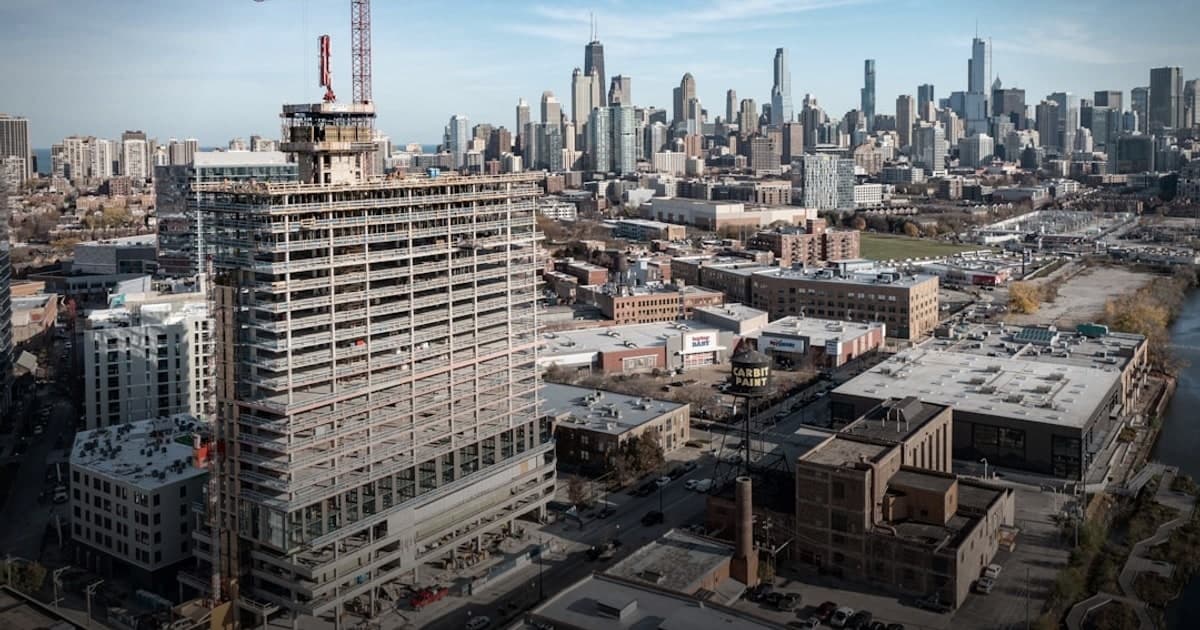
Photograph: Julian Lupyan's Chicago Skyline from the East, August 3, 2026, dedicated to the public domain under CC0. The Chicago view is city context for this national analysis.
Free CRE News Briefing
Editor-curated commercial real estate stories, delivered to your inbox. Confirm your email to join.