Retail Didn’t Dodge an Apocalypse. It Got Smaller, Smarter, and Closer to Home.
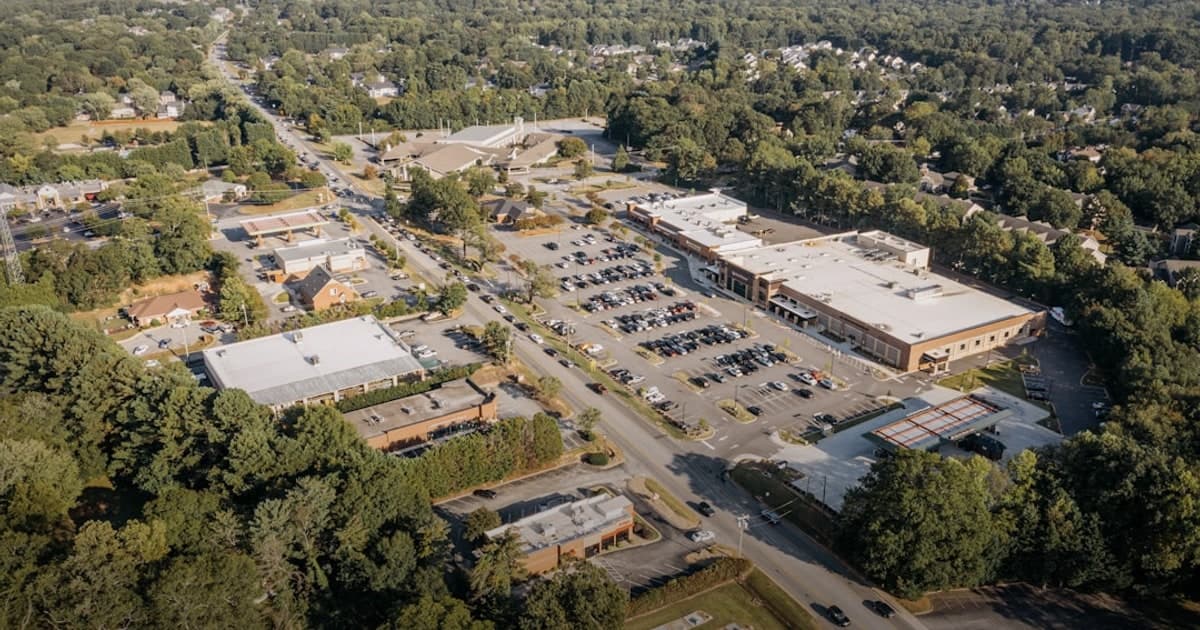
Alex Reynolds / Unsplash
I keep coming back to one simple data point from my own newsroom: retail accounts for 114 of my last 500 stories, and almost every one of those is either a sale or a re-tenanting, not a closure. That matters.
Not because it proves retail is suddenly easy again. It doesn’t. And not because every shopping center is healthy. They aren’t. What it does tell me is that the old catchall “retail apocalypse” frame has stopped being a useful way to understand neighborhood-format retail.
If you spend your time in the trenches of commercial real estate, you already know the broad panic never fit every asset type equally. The weakest formats got hit hardest. The least differentiated boxes got exposed. Tenant mixes built for an older consumer pattern lost relevance. But neighborhood retail did something important that a lot of people outside the business missed: it adapted without needing a grand narrative to save it.
That is what the transaction volume is really showing us.
When I see steady deal flow in neighborhood centers and single-tenant retail, I do not read that as blind optimism. I read it as price discovery meeting operational reality. Buyers are still willing to step into these deals because they can understand the income, understand the customer, and understand the physical role the property plays in a trade area. That is very different from the old assumption that e-commerce would flatten all brick-and-mortar into the same casualty list.
It didn’t. Retail split.
The retail that depends on routine, convenience, quick trips, and habitual local traffic is not playing the same game as discretionary big-box retail was playing ten years ago. A neighborhood center anchored by daily-use tenants is part of people’s weekly rhythm. It is not a substitute for online shopping because much of what it sells was never purely about product selection in the first place. It is access, proximity, repetition, and time savings.
That is why so many of the stories crossing my desk are not about dramatic reinvention. They are about continuity with adjustment. A center trades because a buyer sees durable demand. A vacancy gets backfilled because the box still works, even if the next tenant category is different from the last one. A net-lease deal gets done because there is still plenty of capital that wants a readable cash-flow story in a confusing market, as we saw in East Texas Net-Lease Market Heats Up With Sale of Tyler IHOP Location.
To me, that is the real shift. The conversation should be less about whether retail “came back” and more about which retail remained essential enough to keep attracting capital and tenants through several rounds of disruption.
Neighborhood-format retail has advantages that look almost boring on paper, which is usually a good sign in this business. It lives closer to rooftops. It serves existing traffic instead of hoping to create destination traffic from scratch. It can absorb tenant change without losing its whole reason for being. If a center has the right location and the rents are still supportable, a re-tenanting is not a distress story. Often it is the market doing maintenance.
That distinction matters because too many people still treat any retail turnover as proof of weakness. I don’t. In a healthy neighborhood center, churn can be evidence of relevance. Space gets recycled toward operators who better fit current spending habits, current labor realities, and current neighborhood demographics. That is not failure. That is the format staying alive.
Look at the pattern in stories like Indianapolis Neighborhood Retail Center Avalon Crossing Trades Hands and West Sacramento Neighborhood Retail Center Trades for $6.2M. Different places, same theme: capital is still showing up for neighborhood retail where the real estate serves a daily function. Not every deal is a blockbuster. That is the point. The volume is coming from ordinary usefulness.
And that, in my view, is why the apocalypse narrative now gets in the way more than it helps. It trained too many people to ask the wrong question. The wrong question is: “Did retail survive?” The better question is: “Which retail formats kept enough local utility to remain liquid?”
Liquidity is the clue here. Transaction volume is not a victory lap. It is evidence that buyers and sellers can still meet around an asset class with workable assumptions. They may disagree on cap rates, tenant credit, rollover risk, or near-term leasing costs, but they are still speaking the same language. In tougher property types, that common language breaks down fast. In neighborhood retail, it has held together far better than the old storyline would suggest.
I also think this says something about how investors are redefining safety. For a while, “safe” often meant abstract scale, national branding, or the illusion that digital disruption was somebody else’s problem. Today, a lot of safety looks more local. It looks like an irreplaceable corner, a familiar parking field, a service-heavy rent roll, and a tenant mix built around repeat visits instead of occasional splurges.
That does not mean every neighborhood center is a winner. Bad access still hurts. Overstored trade areas still exist. Weak merchandising still shows up in the rent roll. And plenty of centers will need smarter leasing than they did a decade ago. But the steady stream of sales and re-tenantings tells me something important: this format is not frozen, and it is not being abandoned.
It is being repriced, released, and re-used.
That is a much more accurate story than apocalypse. And for people actually buying, leasing, and operating these assets, accuracy matters a lot more than drama.
Free CRE News Briefing
Editor-curated commercial real estate stories, delivered to your inbox. Confirm your email to join.