New Fed Leadership Signals Rate Stability: What It Means for CRE Capital Markets
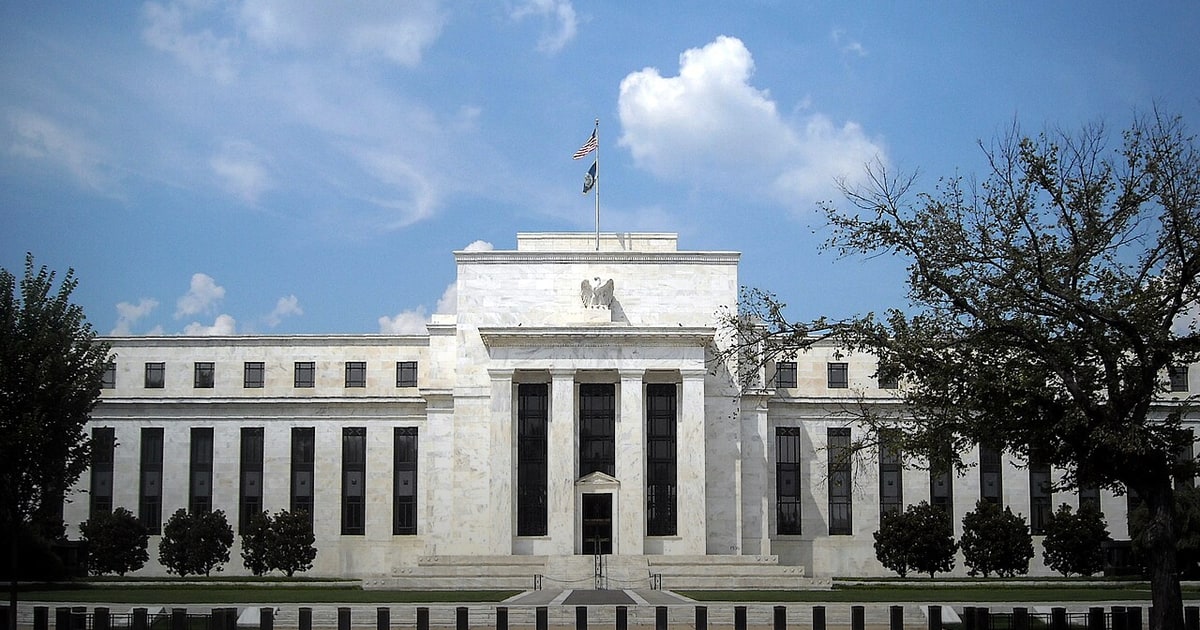
AgnosticPreachersKid / CC BY-SA 3.0
The Federal Reserve held its target federal funds rate at 3.5%–3.75% following Kevin Warsh's first meeting as central bank Chair this June—a decision that directly influences the cost of capital across U.S. commercial real estate. With the benchmark lending rate holding steady following an aggressive tightening cycle, commercial property investors and developers are carefully parsing the new chairman's policy framework to map out their acquisition, refinancing, and development pipelines for the remainder of 2026.
Key Details
According to CNBC, the June Federal Open Market Committee (FOMC) meeting marks a distinct leadership transition at the central bank. The primary parties involved include the 12 voting members of the FOMC, newly appointed Chair Kevin Warsh, and Treasury officials coordinating broader fiscal policy.
Rate Decision: The FOMC held its benchmark overnight borrowing rate at the 3.5%–3.75% target range. Monetary Policy Shift: Warsh's leadership introduced changes including the elimination of the Fed's traditional forward guidance and the formation of internal task forces to overhaul Fed operations. Timeline: The official rate decision and updated Summary of Economic Projections (SEP), which includes the highly scrutinized "dot plot" of future rate expectations, was released June 17. Immediate Financial Impact: Prime lending rates hold at approximately 6.5%–6.75%, reflecting the actual fed funds range and setting the baseline for commercial mortgages, bridge loans, and corporate credit facilities.
Market Context
For commercial real estate professionals, the FOMC outcome is more complex than a simple rate hold suggests. FOMC members were split on the rate outlook, with a significant share penciling in a potential hike — removing the rate-cut bias the market had anticipated. Following the 525-basis-point hiking cycle of 2022–2023, the current plateau allows institutional buyers and private equity firms to underwrite acquisitions without the immediate threat of rapid debt-service coverage ratio (DSCR) deterioration, though the risk of future tightening remains.
Warsh's operational changes at the Fed — including eliminating forward guidance — could alter underwriting standards across major asset classes. If the new framework proves more restrictive than anticipated, liquidity for higher-risk ventures like ground-up industrial development and opportunistic office conversions could tighten. Institutional capital flows will likely direct themselves toward core, stabilized assets—particularly Class A industrial and multifamily properties in Sun Belt markets—where rent growth provides a reliable margin of safety against elevated debt costs.
Furthermore, the trajectory of the 10-year Treasury yield remains a key concern for CRE investors pricing long-term fixed-rate debt. Should Warsh's messaging signal a higher-for-longer terminal rate, the resulting upward pressure on Treasury yields will directly compress CRE transaction volumes by widening bid-ask spreads between buyers and sellers. Conversely, any signals that align with a 2026 rate-cut path could unlock pent-up transaction volume, triggering activity in distressed asset trades, CMBS issuance, and loan origination across the commercial property sector.
Related coverage: Warren Slams Warsh Fed Nomination as Powell Investigation Creates Leadership Vacuum Impacting Rate Outlook · How a Warsh-Led Fed Could Reshape Commercial Real Estate Financing · Federal Reserve Holds Steady on Interest Rates Amid Middle East Tensions
Stay Ahead of the Market
Get breaking CRE news, market reports, and analysis delivered to your inbox every morning.