How Phoenix’s $9,000 reuse incentive fits into a small-building deal
Original analysis | Phoenix policy documents checked October 27, 2026
For a buyer or tenant trying to reopen an older Phoenix commercial building, the city's adaptive-reuse incentive can reduce a specific part of the bill. The harder underwriting task is establishing which fees, building and proposed use qualify before that saving enters the deal budget.
A review of the city's current linked documents also exposes a size question that deserves a written answer. The fee-eligibility sheet, marked July 2026, sets a 25,000-square-foot ceiling. The application, marked April 2026, includes a tier extending to 100,000 square feet. A checkbox for the broader program should not become an assumed $9,000 credit in an acquisition model.
This is a review of an existing program, not an announcement of new funding or a report that a particular property has qualified. Phoenix describes an adaptive-reuse pilot dating to 2008. The immediate value for a deal team is a more disciplined eligibility and cost check.
Establish the benefit before pricing the property
The city's program overview advertises development guidance, coordinated processing and potential cost savings for adapting older buildings to new business uses. Those are separate benefits. An easier review path does not establish the amount of an incentive.
The fee-eligibility sheet allows up to $9,000 toward eligible site-plan and commercial-construction plan-review and permit fees associated with establishing new occupancy. It excludes zoning applications and leaves eligibility to the Office of Customer Advocacy, or OCA.
The practical budget entry is therefore a conditional reduction to identified eligible charges. Contractor invoices, professional design fees and the cost of acquiring the building do not become covered simply because a project involves reuse.
For the fee incentive, the published screening criteria call for an independent structure permitted before 2000, no more than 25,000 square feet, with a change of occupancy or significant use change covering the entire building. The document also lists excluded uses, including off-premises liquor retail, tattoo and pawn shops, hazardous occupancies and places of worship. Applicants should check the complete list against their actual operation.
A tenant taking one suite in a larger building should consequently establish whether the proposed scope satisfies the whole-building criterion. A broker's description of a property as historic or suitable for reuse is not an eligibility determination.
Resolve the size question in the linked paperwork
The April 2026 application asks for existing, added and total floor area, construction year, and previous and proposed uses. It requires OCA approval to determine eligibility for funds or regulatory-relief policies and includes a tier above 25,000 square feet through 100,000 square feet.
Other program documents also contemplate larger buildings. The April 2026 landscape policy expressly covers three tiers, with its third tier extending above 25,000 square feet through 100,000 square feet and including certain large-scale commercial retail.
These documents establish why the broader program and a particular fee incentive should be checked separately. They do not, by themselves, settle how OCA would apply the smaller fee limit to a larger applicant today.
A larger-building buyer should send OCA the property data and ask which relief policies apply, whether any fee incentive is available, and the approved amount. Until that determination is documented, the conservative acquisition assumption is no incentive. This review did not obtain a city interpretation of the difference between the forms.
Put the ceiling through a real budget test
Consider a hypothetical project with $6,000 in charges that OCA has approved as eligible, a separate $3,000 zoning-application charge and $5,000 in professional design costs. These are illustrative assumptions, not Phoenix fee quotations or an actual award.
Even if all $6,000 of eligible charges are offset, the $9,000 ceiling does not produce another $3,000 to spend elsewhere. The assumed $14,000 total falls to $8,000, with construction and other project costs still to be added. If the approved offset is smaller, the remaining bill is larger.
That distinction affects lease negotiations as well as acquisition pricing. An owner and incoming tenant should identify who pays each charge, who applies for relief and how any approved saving affects their agreed allocation. Otherwise both parties can quietly budget the same benefit.
Faster processing still has a risk owner
The city's assumed-risk affidavit, revised April 2026, describes an option for concurrent zoning-action and construction-plan processing. It warns of potentially unnecessary, nonrefundable fees, redesign, delays and additional charges. It also says the option is unavailable for projects seeking rezoning and that permits await completion of outstanding zoning actions even if construction plans are approved.
For underwriting, parallel work is a decision about spending before every issue is resolved. Identify the unresolved action, the professional work exposed to redesign and the party carrying that cost. Do not convert the possibility of overlapping reviews into a promised opening date.
The evaluation-report process likewise offers a limited alternative to a full plan submission for certain single-story existing buildings with little construction and no added floor area. It requires a sealed professional report, separate site, civil and traffic reviews, and attention to life-safety and building systems. Discovering extensive additional work can require further plans or permits.
A fee saving does not remove the need to investigate the building that must reopen.
The deal file should contain five answers
Before treating reuse relief as part of the economics, assemble:
- The property record: permit history, floor area, existing occupancy and proposed whole-building scope.
- The city determination: applicable program policies, approved fee categories and an actual incentive amount, if any.
- The remaining obligations: zoning, site and building requirements that survive the proposed relief.
- The cost allocation: who pays fees, design, construction, redesign and delays, and who receives any saving.
- The opening assumptions: unresolved approvals and the conditions that must be met before occupancy.
Phoenix's program can help a qualifying small business use an existing building. The investment decision still turns on the total cost and time needed to make that building useful. Getting the precise city benefit in writing makes the potential saving more credible and the remaining risk easier to price.
Related: Arizona CRE refinancing: five checks before a loan matures and Phoenix coverage.
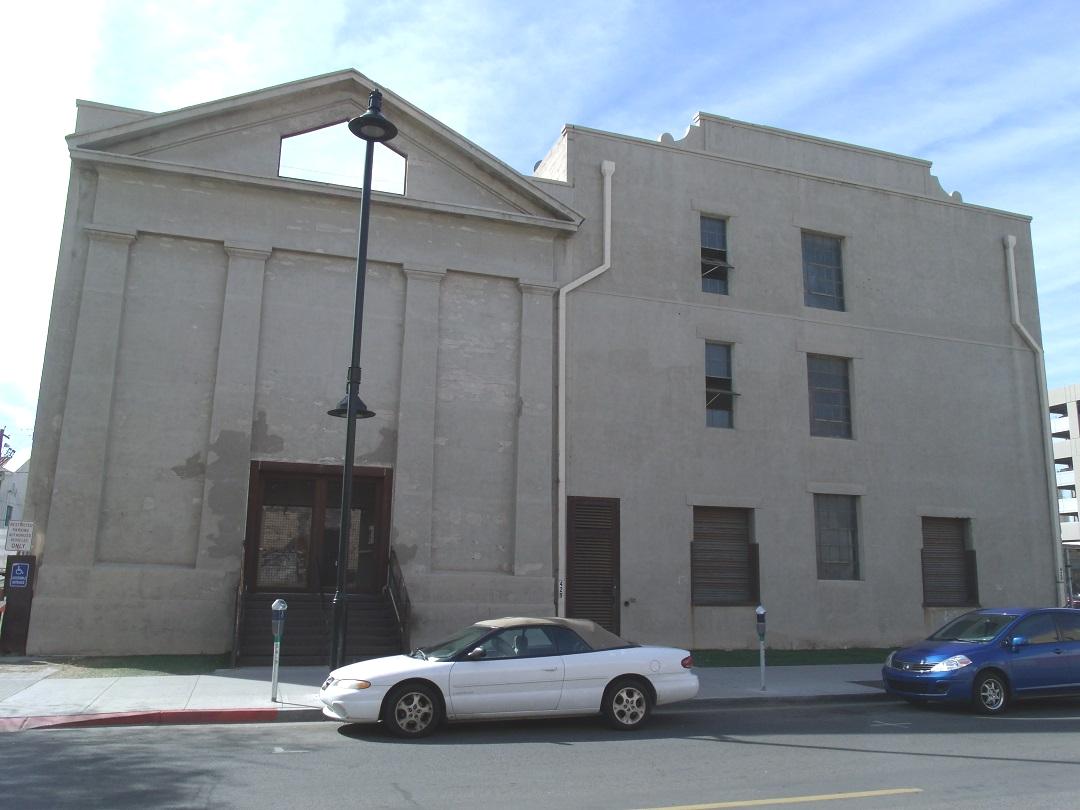
Image: the Constable Ice and Fuel Co. building in Phoenix, photographed in 2014. Archival illustration only; no fee-incentive eligibility or award is implied. Photograph by Marine 69-71 (Tony the Marine), Wikimedia Commons, licensed CC BY-SA 3.0. Original image unchanged.
Free CRE News Briefing
Editor-curated commercial real estate stories, delivered to your inbox. Confirm your email to join.