This Week in Commercial Real Estate — June 27, 2026

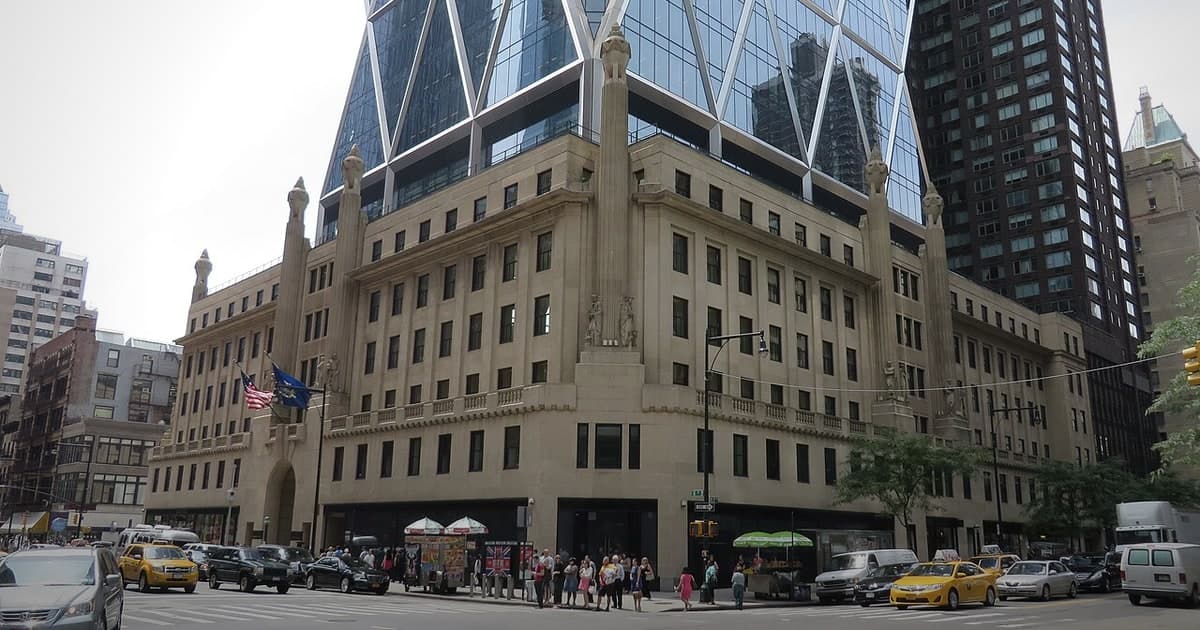
Kidfly182 / CC BY-SA 4.0
Commercial real estate spent the week telling a familiar but increasingly nuanced story: capital is available, but it is flowing with far more selectivity and purpose. Across sectors, the clearest pattern was not simple expansion or retrenchment, but owners and lenders repositioning around what still has conviction — and what now needs a new strategy.
Capital is rewarding resilience, not just growth
The biggest throughline this week was the continued dominance of financing stories that favored stabilized assets, near-finished projects and markets with a clear operating case. Mesa West Lends $82.5M to Refinance Olin Fields Apartments Near Seattle, Gantry Arranges $38M Refinance for Mesa Grand Retail Center in Mesa and Lument Arranges Fannie Mae Acquisition Financing for Aspen Forest in Northwest Houston all point to the same market truth: debt is still getting done, but around assets that can already demonstrate durability.
That matters because these were not speculative growth bets. They were refinancings and acquisition financing tied to existing income, maturing obligations and conventional multifamily demand. Even Peachtree Group Provides $43.5M Bridge Loan for Panama City Beach Multifamily Buildout fits the pattern. The project was already roughly 90 percent complete, making the bridge loan less about blind development risk and more about carrying a nearly delivered asset across the finish line.
The message from capital markets is becoming sharper: money is available for completion, stabilization and refinancing, especially where there is a believable path to cash flow. In today’s environment, that is a much narrower definition of confidence than the market enjoyed a few years ago.
Multifamily remains the sector of conviction — but the bets are getting more strategic
If one property type still commands the broadest institutional comfort, it is multifamily. But this week’s stories showed that even within apartments, the market is fragmenting into distinct strategies. Some capital is chasing plain-vanilla workforce or garden-style assets, as seen in Lument Arranges Fannie Mae Acquisition Financing for Aspen Forest in Northwest Houston. Some is supporting long-hold refinancings, as in Mesa West Lends $82.5M to Refinance Olin Fields Apartments Near Seattle. And some is backing highly specific repositioning plays, including Crescent Heights Lands $210M to Convert Santa Ana Apartments Into Orange County's Tallest Residential Towers.
At the same time, developers are still pursuing scale where local demographics and supply narratives support it. Brook Farm Group and Manor Park Ventures Partner on 336-Unit Savannah Apartment Project and Joint Venture Plans Georgetown's Largest Apartment Project in Over 100 Years show that large multifamily projects remain viable when they are tied to compelling neighborhood stories and long-term housing demand.
Then there is the more structural side of the apartment story. How a Five-Square-Mile City Became a Magnet for Multifamily Developers suggests developers are clustering in tightly bounded, high-demand submarkets where incremental supply can still be absorbed. Multifamily is not just “hot”; it is becoming more geographically and operationally selective.
Hospitality’s World Cup narrative is splitting in two
Hospitality produced the week’s most revealing contradiction. On paper, the 2026 World Cup should be a clear win for hotels and surrounding real estate. But World Cup 2026's Commercial Real Estate Impact: Record Rates, Softer Hotels, a Rental Surge and World Cup Final Brings a $3.3B Projection and a Hotel Paradox to New York/New Jersey show that projected economic impact is not translating evenly into hotel booking strength. In some host markets, hotels are behind expectations even as short-term rentals near venues surge.
That makes Miami Is Winning the World Cup Hotel Race as Other Host Cities Stumble even more notable. Miami is not just outperforming on bookings; it also secured FIFA’s expanded Americas headquarters, reinforcing how mega-events can amplify existing market momentum rather than create it from scratch. The World Cup may benefit all host cities symbolically, but operationally it appears to be favoring the markets that were already global hospitality and tourism magnets.
The hospitality takeaway, then, is less about universal event-driven upside and more about divergence. A major international event can raise visibility across the board, but it does not erase local demand dynamics, pricing friction or competition from alternative lodging.
Office and operating platforms are being redefined, not abandoned
Office did not dominate the week, but the stories that did emerge were telling. Morgan Stanley Weighs Dallas Office Tower as Finance Expansion in Texas Accelerates and Teachers' Retirement Agency Commits to Three-Decade Stay at FiDi Office Tower show that major occupiers are still making large, long-duration office decisions when location and mission line up. YouTube Creator Tools Company Spotter Inks 17K SF Midtown Lease with Thor Equities adds another layer: even shorter commitments can still support quality buildings in established submarkets.
But the week’s broader “future of work” story came from outside traditional office leasing. How AI Search Is Reshaping Who Gets the First Call in Commercial Real Estate suggests brokerage and deal sourcing are changing at the top of the funnel, while How One PropTech Unicorn Is Coaching Landlords to Trim Headcounts Through AI points to potentially deeper operational change inside property companies themselves.
Taken together, these stories suggest that real estate’s next reinvention may be as much about workflows, tenant mix and platform efficiency as it is about asset values. Occupancy still matters, but so does how owners find business and run buildings.
Portfolio reshuffling is accelerating across sectors
Finally, several stories underscored how owners are reassessing what belongs in their portfolios at all. Ryman Weighs Sale of Controlling Interest in Opry Entertainment Group is a reminder that even iconic entertainment-linked holdings are subject to capital recycling. Bed Bath and Beyond Moves Deeper Into Housing With Planned Fathom Acquisition shows a retailer pushing beyond its legacy lane into a housing-adjacent platform strategy. Meanwhile, Hilltide Capital Acquires Stonesthrow Crossing Retail Center in Greensboro and Doors & Spaces Acquires Fully Leased Industrial Building in Voorhees for $4.1 Million reflect continued appetite for stabilized retail and industrial product at the asset level.
The common denominator is not sector enthusiasm alone. It is active curation. Owners are selling, buying and expanding into businesses that better fit where they think demand, capital and operating leverage are heading next.
What to watch: whether this selective confidence broadens into a real recovery — or stays concentrated in the few assets, markets and strategies that can already prove their case.
Free CRE News Briefing
Editor-curated commercial real estate stories, delivered to your inbox. Confirm your email to join.